INFO/Action: Professional Learning with Cornelius Minor on Engagement, Critical Thinking & Creativity

Hi All:
Robert Austin, USBE Humanities Coordinator, and I are excited to offer the following virtual professional learning series to secondary ELA and social studies folks (classroom teachers, instructional/literacy coaches, district leaders) with Cornelius Minor called "Put The Oxygen Mask on Yourself First: What it Means To Learn Right Now." This is a series on meeting the needs of a changing learning landscape by focusing on ENGAGEMENT, CRITICAL THINKING, and CREATIVITY.
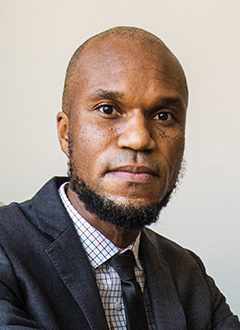
[A person with a beard Description automatically generated with low confidence]Cornelius Minor is a Brooklyn-based educator. He works with teachers, school leaders, and leaders of community-based organizations to support literacy reform in cities (and sometimes villages) across the globe. His latest book, We Got This, explores how the work of creating more equitable school spaces is embedded in our everyday choices-specifically in the choice to really listen to kids. Whether working with educators and kids in Los Angeles, Seattle, or New York City, Cornelius uses his love for technology, hip-hop, and social media to bring communities together. As a teacher, Cornelius draws not only on his years teaching middle school in the Bronx and Brooklyn, but also on time spent skateboarding, shooting hoops, and working with young people.
If you're familiar with Cornelius and his work, you know how much of a treat this will be. I attended several of his sessions at NCTE and learned so much from him and his work in classrooms. So please join us and encourage others in your circles to attend.
Dates/Times:
* Session #1: February 8, 3:30-6:30pm MST * Session #2: February 15, 3:30-6:30pm MST * Session #3: March 8, 3:30-6:30pm MST *Please note that this is a 3-part series. Participants will need to attend all three parts.
Location: Zoom
Cost: FREE
Registration: MIDAShttp://usbe.midaseducation.com/ course ID: 60758
Schedule, Learning Intentions, & Success Criteria:
Meeting I: February 8 Focus - ENGAGEMENT (how students engage with content & how we engage with them) What you'll learn. What you'll be able to do after this experience. Possible next steps after this experience. What it means to teach right now. So much has changed. There are so many demands on our energy and time. This will be a session on seeing through the haze of contemporary school-based urgency, (everything must be done RIGHT NOW!) identifying what's important for students, and setting realistic priorities despite the noise of "crisis" all around us. We cannot see young people authentically if we are always in "emergency" mode. You will be able to:
1. Think about & name your own professional needs/goals. 2. Consider the needs/potential growth areas of individual students & balance them with the demands of our institutions. 3. Think through school based challenges in sustainable, student centered ways. When we commit to real-world (Portrait of a graduate) learning outcomes for young people, that means we are committing to classroom based shifts for ourselves.
Name some specific shifts that feel important to you.
Make a plan for how these changes can go.
How will you discuss these shifts with colleagues? Who? When?
Meeting II: February 15 Focus - CRITICAL THINKING (how students think about the world and their experiences as texts & how we think about what it means to do school) What you'll learn. What you'll be able to do after this experience. Possible next steps after this experience. When we say that we are student-centered what, exactly does that mean? How does this connect to the idea of equity, inclusion, or diversity? This will be a session on the kind of adult mindset and classroom-based adjustments that we can make to ensure that all students get what they need in the time that they are with us. You will be able to:
1. Consider approaches like Personalized Competency Based Learning or Universal Design for Learning to sharpen instructional experiences for kids. 2. Plan lessons that reflect our belief in all children. We don't get better because we simply talk about teaching. We get better when we practice what we learn.
Make a plan for how you will practice today's learning in terms of the content that you teach.
Make a plan for how you will practice today's learning in terms of the methodologies that you employ.
What systems will have to change as a result of today's learning? How will you change them.
Sometime this month. Try all of these things. Be prepared to talk about them next month. Bring artifacts.
Meeting III: March 8 Focus - CREATIVITY (how students move beyond scholastic compliance to real innovation & how we innovate for them) What you'll learn. What you'll be able to do after this experience. Possible next steps after this experience. Creating classroom-based change is not an overnight process. There will be mistakes, challenges, missteps, and misunderstandings. This is all part of the learning process.
What does it mean to be culturally proficient in today's context? And how do we stay empowered and productive when things can feel so challenging sometimes. This will be a session on how to establish the kind of sustainable professional stance that puts children first while acknowledging our need for continued professional growth, rest, and care.
Here we reflect on our experience so far and plan next steps for students and for ourselves. You will be able to:
1. Think about what we learn when we "assess" kids. 2. Make strategic adjustments to content and methodology. 3. Talk about how those adjustments connect to curricular outcomes, and how they speak to equity... Make a plan for how you will use the work that we shared here moving forward.
Who, in this group, will you stay connected to? When will you meet with them?
Naomi Watkins, Ph.D. Secondary ELA and Library Media Specialist Utah State Board of Education 801-538-7616
-
 Watkins, Naomi